
Direct Answer: The Universal 48-Hour Ponding Water Rule
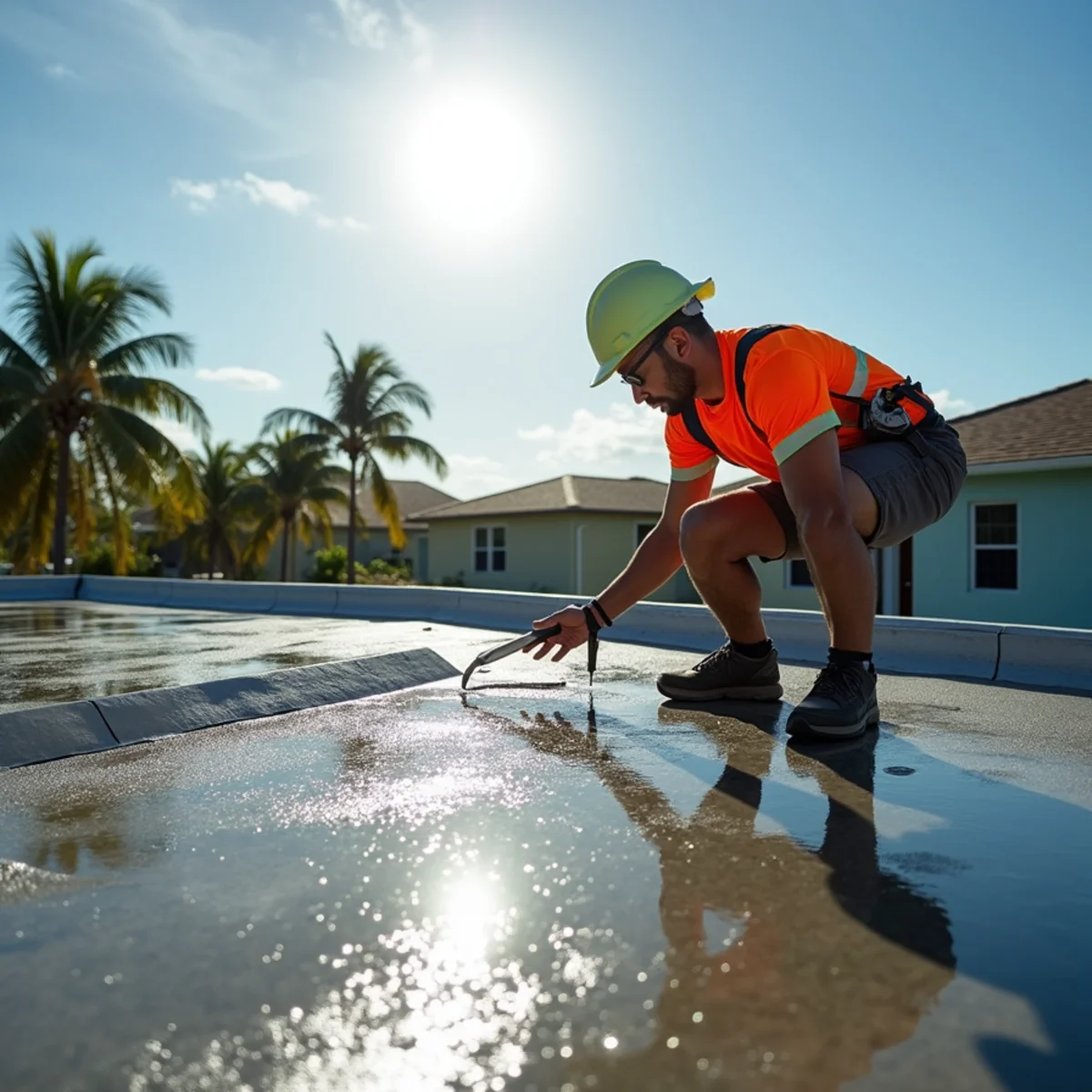
The universally recognized roofing industry standard—endorsed by the National Roofing Contractors Association (NRCA) and the Florida Building Code—defines ponding water as any water that remains standing on a low-slope or flat roof 48 hours or more after precipitation has ended under conditions conducive to drying.
If standing puddles on your flat roof evaporate within 24 to 36 hours of sunshine, the moisture is considered temporary runoff. However, if water remains trapped in dips and low spots for 48 hours or longer, it is classified as chronic ponding. Chronic ponding rapidly accelerates membrane degradation, multiplies structural dead load, voids manufacturer warranties, and virtually guarantees future roof leaks.
The Destructive Physics of Standing Water on Coastal Florida Low-Slope Roofs
Flat roofs on residential homes in Pinellas County—frequently found over Florida rooms, enclosed sun porches, carports, and modern mid-century additions—face relentless environmental challenges. Water weighs approximately 8.34 pounds per gallon, or roughly 5.2 pounds per square foot for every single inch of water depth.
When a 15-foot by 20-foot low spot collects two inches of standing rain, it places over 3,000 pounds of unexpected dead weight onto wooden roof rafters designed for live loads. This concentrated weight causes underlying rafters to deflect downward even further, creating a progressively deeper bowl that captures more water during subsequent storms—a vicious cycle known in structural engineering as 'progressive deflection.'
Need Immediate Guidance on Your Clearwater Roof?
Speak with our local coordinator at (773) 207-0769. Open 24/7 with rapid Pinellas County response.
UV Lens Magnification and Membrane Degradation Under the Pinellas Sun
Beyond hydraulic weight, standing water inflicts severe chemical and thermal damage on low-slope roofing membranes like modified bitumen, built-up asphalt (BUR), and TPO (thermoplastic polyolefin).
During clear Florida afternoons, the surface of a standing water puddle acts like an optical magnifying lens, focusing intense solar ultraviolet radiation directly onto the submerged membrane. Furthermore, as water heats to over 130°F, it leaches plasticizers and stabilizing oils out of the rubber compounds, making the membrane brittle, oxidized, and prone to micro-cracking.
How to Correct Ponding Water Without Tearing Off the Entire Roof Structure
Homeowners often worry that fixing a ponding roof requires tearing down ceiling framing and rebuilding trusses from scratch. In reality, skilled commercial and residential roofing contractors have multiple non-destructive engineering remedies.
- Tapered Polyiso Crickets: Installing rigid polyisocyanurate foam panels pre-engineered with a 1/4-inch or 1/2-inch per foot slope to channel water away from low spots toward drains.
- Through-Wall Scuppers & Conductor Heads: Cutting wider municipal scupper boxes into exterior parapet walls to prevent water backing up along exterior masonry lines.
- Interior Roof Drain Sump Rings: Lowering internal drain bowls so surrounding membrane sits flush with the drainage inlet.
- High-Solids Silicone Coatings: Applying thick, moisture-curing elastomeric silicone coatings that resist chemical breakdown even under continuous standing water.
Low-Slope Roofing Systems for Florida Ponding Resistance
Not all flat roofing materials perform equally when subjected to standing water conditions.
| Roofing System | Ponding Resistance | Expected Lifespan | UV Reflection (Cool Roof) | Maintenance Demands |
|---|---|---|---|---|
| Heat-Welded TPO (60-mil) | Excellent (hot-air welded seams) | 20 – 25 Years | High (Initial solar reflectance ~0.78) | Low (periodic drain cleaning) |
| 2-Ply SBS Modified Bitumen | Moderate to Good | 15 – 20 Years | Moderate (mineral granular surface) | Moderate (seam checks every 3 years) |
| Commercial Silicone Restoration | Outstanding (hydrophobic formulation) | 15 – 20 Years | Very High (bright white reflective finish) | Low (pressure wash every 2 years) |
| Traditional Built-Up Asphalt (BUR) | Poor under chronic ponding | 12 – 18 Years | Low (unless white gravel ballast added) | High (blister and crack monitoring) |
Routine Drainage Maintenance in Coastal High-Foliage Areas
In many Pinellas communities, such as Dunedin, Safety Harbor, and Clearwater, ancient Live Oaks, Laurel Oaks, and cabbage palms drop heavy leaves, seed pods, and pine needles onto flat roof surfaces.
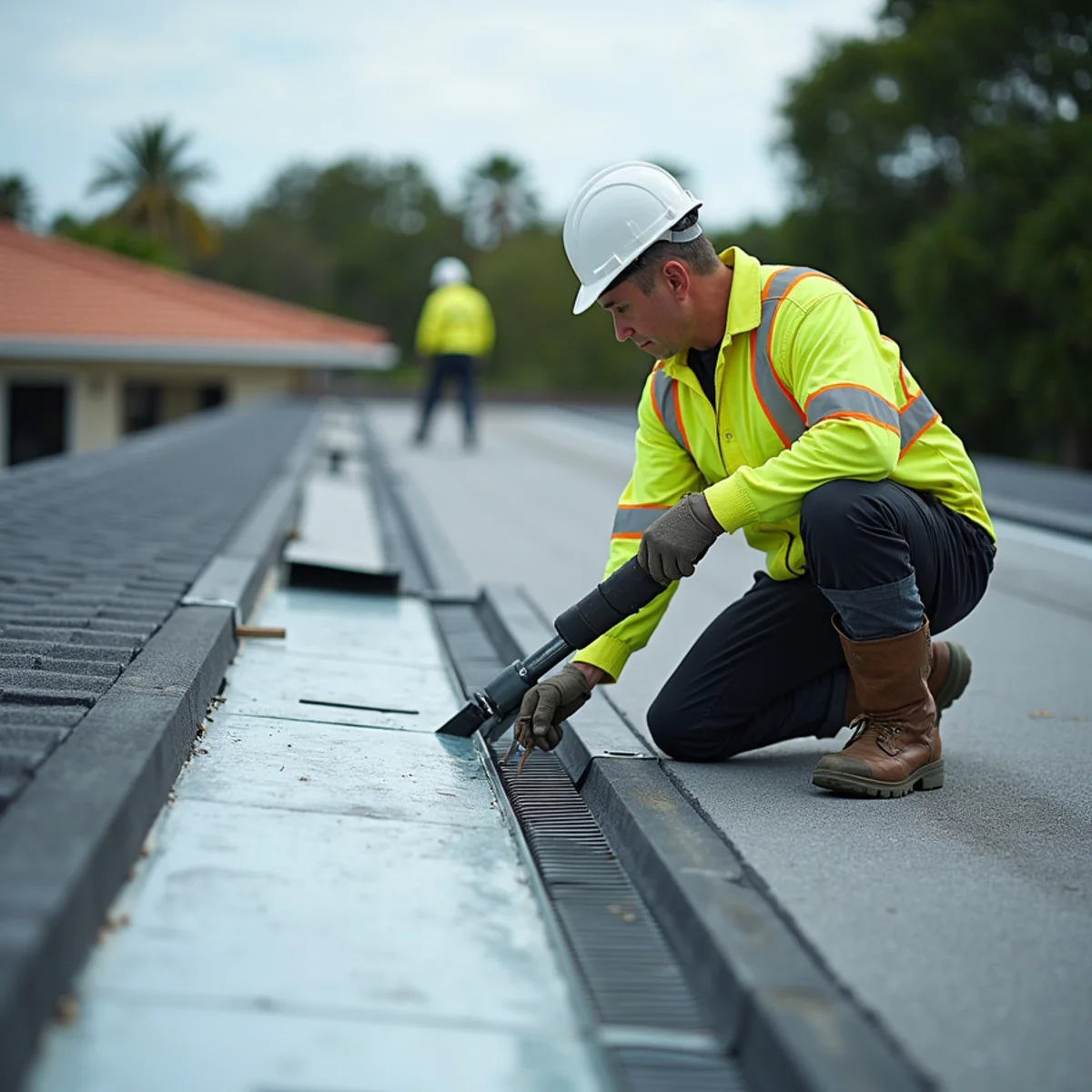
This organic matter gathers around drain strainers and inside scupper outlets, forming dense compost dams that trap thousands of gallons of rainwater. Performing bi-annual drain cleaning and trimming back overhanging tree canopies ensures runoff flows freely toward gutter systems. In coastal Pinellas County, periodic professional maintenance inspections every six months ensure your low-slope drainage system stays free of clogs and water never sits beyond the 48-hour warranty limit.
Drain Sump Bowls and Emergency Overflow Scupper Requirements
Under Chapter 15 of the Florida Building Code, all commercial and residential low-slope roofs with parapet walls are required to have secondary emergency overflow scuppers or secondary roof drains.
These secondary relief openings must be positioned 2 inches above the primary drain level. If the primary interior drain or downspout becomes clogged with oak leaves or storm debris, water rises to the secondary scupper and discharges visibly out the side of the building, alerting the property owner to the blockage before water weight reaches catastrophic failure thresholds.