
Direct Answer: Tarp Lifespans Under the Harsh Florida Sun
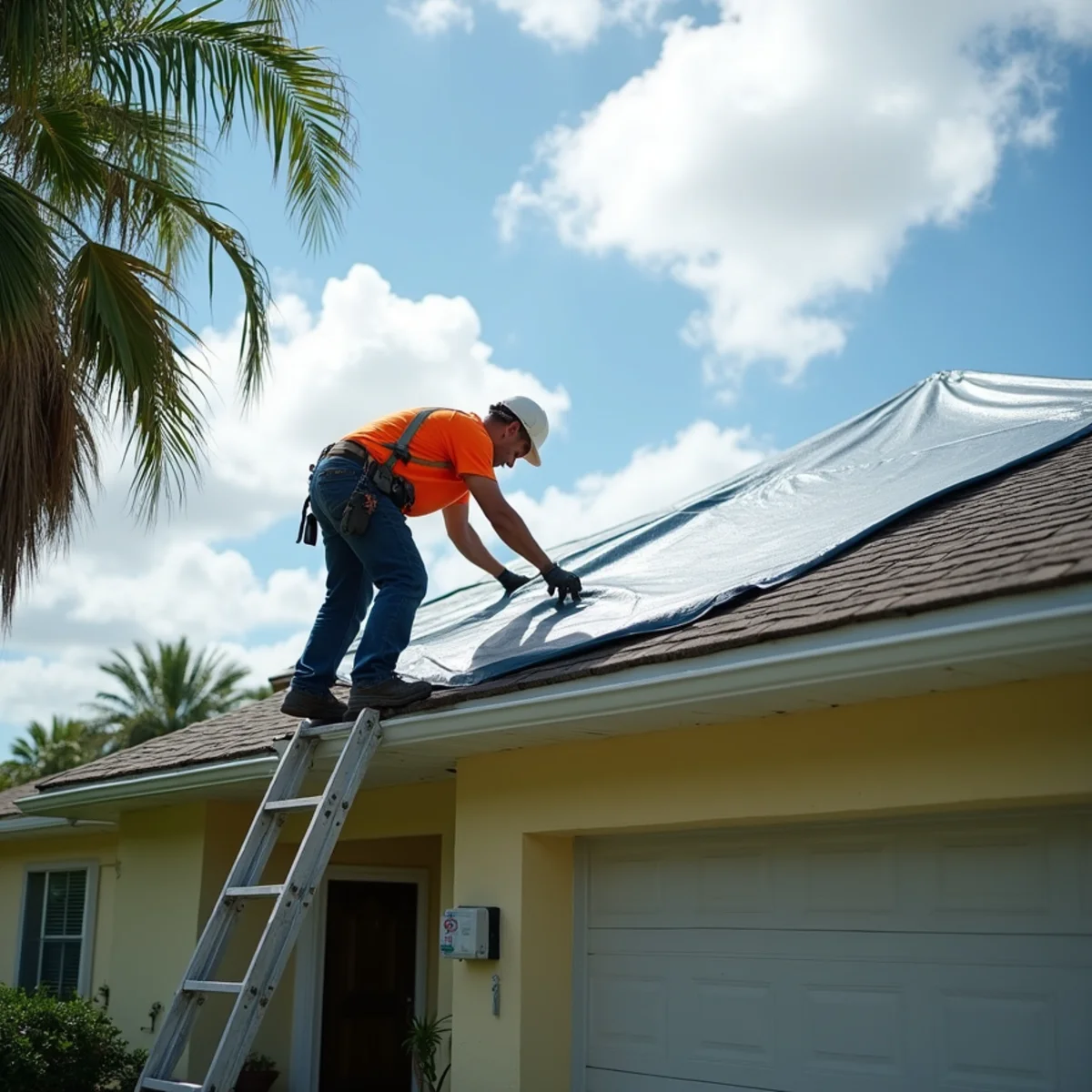
In Florida, a standard blue woven polyethylene emergency tarp should remain on a roof for no more than 30 to 90 days. Under the relentless ultraviolet radiation, high humidity, and intense thermal heat of Clearwater and Pinellas County, standard retail tarps begin shredding, peeling, and disintegrating into plastic ribbons within 60 to 90 days.
For extended temporary stabilization—such as during protracted insurance claim adjustments or material supply delays—commercial heat-fused white shrink-wrap membranes or heavy-duty UV-stabilized 12-mil woven tarps fastened with mechanical furring strips can safely protect a structure for 6 to 12 months. However, local municipal code enforcement and HOA guidelines often limit visible tarps to 30 to 60 days following a declared storm event.
Blue Woven Polyethylene Tarps vs. Heavy-Duty White Shrink-Wrap Membranes
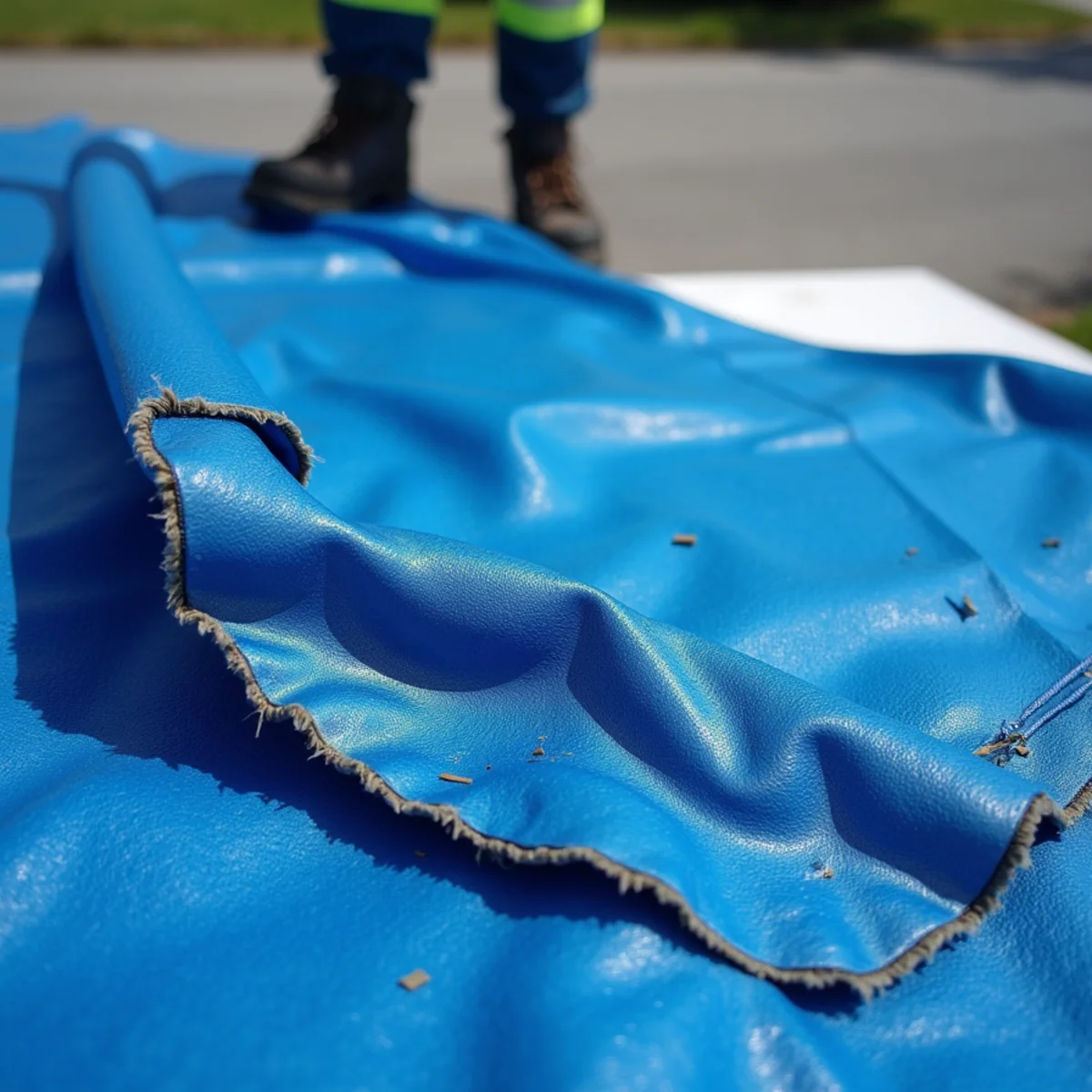
Not all emergency roof coverings perform equally. Understanding the physical differences between blue tarps and heat-sealed shrink wrap helps homeowners select the right stabilization method for their timeline.
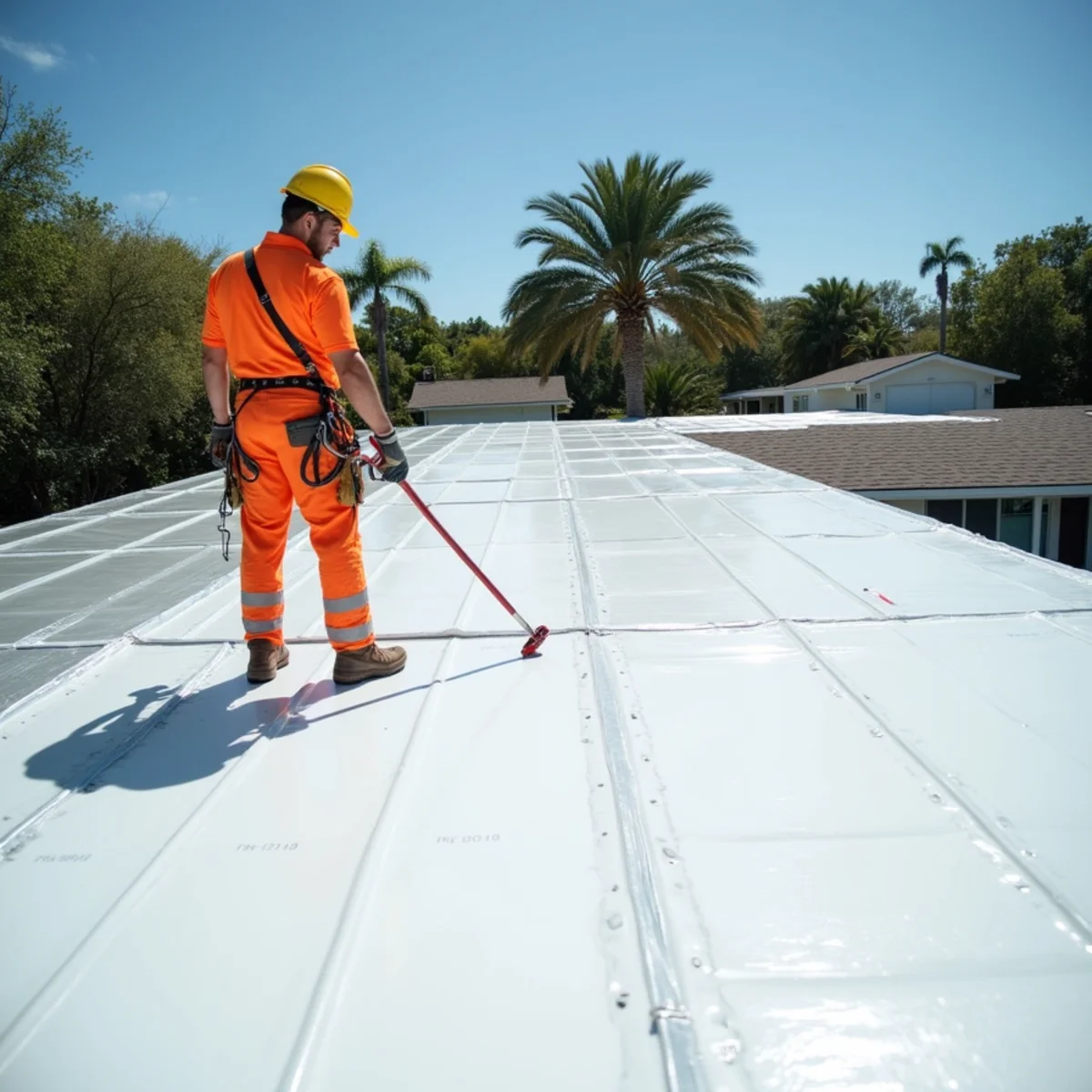
Standard blue tarps are manufactured from cross-woven polyethylene filaments coated with a thin laminate. They are cheap and readily available, but they are not UV-resistant and flap noisily in 20 mph winds. In contrast, heavy-duty 9-mil to 12-mil white shrink-wrap is tensioned over the entire damaged area and heated with a propane heat gun until it shrinks drum-tight over ridges and valleys. Shrink-wrap creates a sealed, puncture-resistant membrane that easily withstands 60+ mph wind gusts and lasts up to a full year.
Need Immediate Guidance on Your Clearwater Roof?
Speak with our local coordinator at (773) 207-0769. Open 24/7 with rapid Pinellas County response.
Mechanical Furring Strip Fastening vs. Sandbags: Why Installation Engineering Matters
How a tarp is fastened to your roof is just as critical as the tarp material itself. Improperly secured tarps routinely blow off during ordinary afternoon thunderstorms, allowing massive water intrusion.
Professional roofing contractors never rely on bricks, cinder blocks, or loose sandbags, which become deadly projectiles during high winds. Instead, crews wrap the edges of the tarp around 1x2 or 2x4 Southern Yellow Pine furring strips, roll the wood inward twice to lock the fabric, and screw the wood securely into the underlying rafters with corrosion-resistant screws. Furring strips prevent wind from catching the tarp's underside and ripping it free.
- Ridge-Over Wrapping: Extending the upper tarp edge over the roof ridge cap so water cannot sheet beneath the top edge.
- Continuous Edge Clamping: Securing 2x4 furring strips every 3 to 4 feet along all perimeters to seal against wind-driven rain.
- Rafter Engagement: Driving fasteners into structural framing rather than relying on weak 1/2-inch plywood sheathing alone.
- Zero Loose Ballast: Never placing concrete blocks, tires, or unanchored weights on steep Florida roofs.
Emergency Roof Tarping Methods & Durability Comparison
Comparing emergency coverings highlights the trade-offs between speed, cost, and maximum safe duration.
| Covering System | Material Durability | Maximum Safe Duration | Wind Resistance Rating | Ideal Scenario |
|---|---|---|---|---|
| Standard Blue Poly Tarp | Lightweight 6-mil woven plastic | 30 to 60 Days | Up to 35 mph | Immediate temporary stopgap while scheduling repairs |
| Commercial Heavy-Duty Tarp | 12-mil reinforced UV silver/black | 90 to 120 Days | Up to 55 mph | Short-term insurance adjuster review window |
| Heat-Fused White Shrink-Wrap | 9 to 12-mil low-density polyethylene | 6 to 12 Months | Up to 70+ mph | Protracted insurance disputes or long material lead times |
| Self-Adhering Underlayment (Dry-In) | SBS modified peel-and-stick membrane | 90 to 180 Days | 110+ mph (code fastened) | Direct step immediately prior to permitted reroofing |
The Hidden Dangers of Leaving a Tarp On Too Long
While an emergency tarp keeps rain out, leaving it installed past its operational life creates severe hidden structural risks. Because tarps are vapor-impermeable, moisture evaporating from your living space and damp attic insulation becomes trapped against the underside of the roof sheathing.
In the intense heat of a Clearwater summer, this trapped vapor creates an incubator for toxigenic mold (such as Stachybotrys chartarum) and wood-destroying fungi. Plywood sheathing that was initially dry will slowly turn soft and rotted, turning a minor $1,200 repair into an extensive $15,000 structural teardown.
Insurance Realities: Your 'Duty to Mitigate' and Municipal Code Citations
Under Florida property insurance contracts, policyholders have an explicit legal 'duty to mitigate damages.' Tarping your roof fulfills this obligation and is typically reimbursed by your carrier under your policy's reasonable emergency repairs coverage.
However, if you leave a shredded tarp on your roof for six months and subsequent rainstorms cause fresh interior ceiling damage, insurers routinely deny secondary claims, citing failure to protect the property. Furthermore, Pinellas County municipalities and strict HOAs in communities like Countryside and East Lake will issue code violation fines if unsightly, flapping tarps are left unaddressed.
HOA Architectural Review Guidelines and Municipal Pinellas Enforcement
Beyond building codes and insurance contracts, homeowners living in deed-restricted communities throughout Pinellas County (such as East Lake Woodlands, Lansbrook, or Feather Sound) face strict Homeowners Association covenants regarding temporary roof coverings.
Most Pinellas HOAs grant a 30-day grace period following a named storm for homeowners to maintain emergency blue tarps. After 30 days, associations may issue daily fines unless the homeowner provides an active, approved municipal building permit demonstrating that permanent reroofing is scheduled with a licensed contractor. Transitioning to sleek white shrink-wrap or a clean dry-in membrane often satisfies HOA aesthetics while protecting the property.